
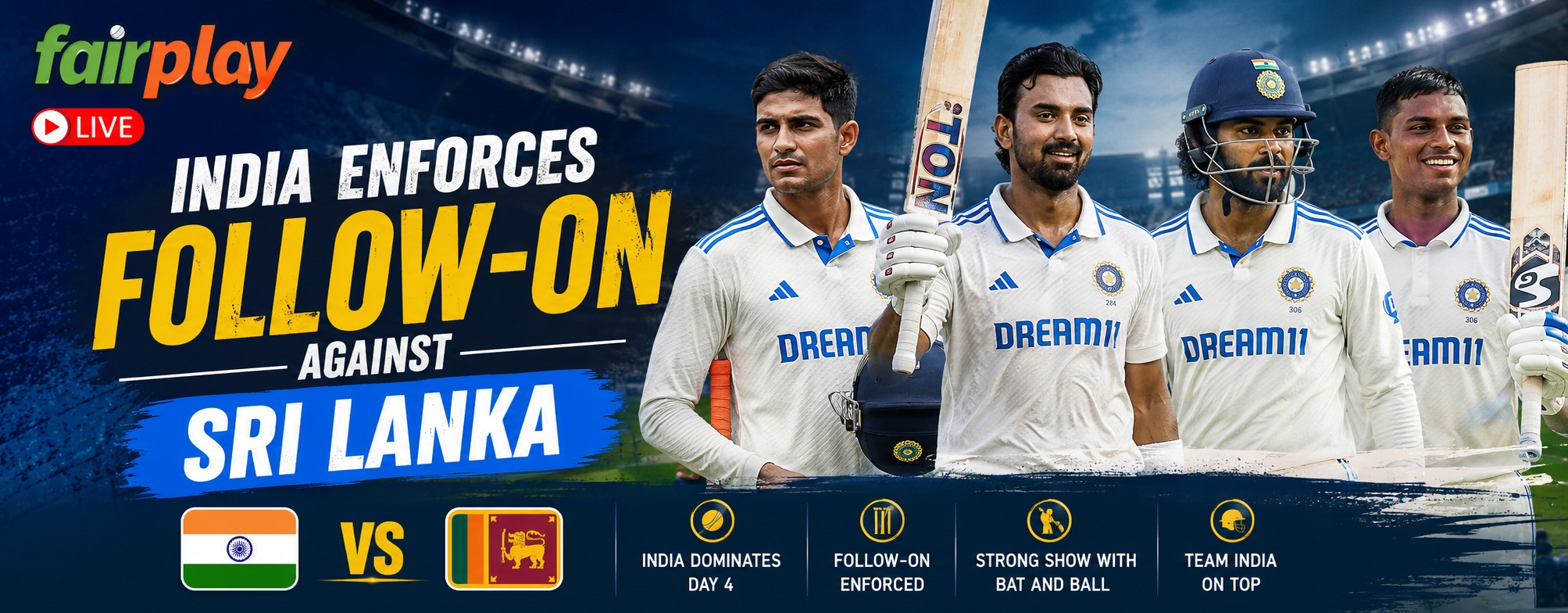
India have strengthened their position in the second Test against Sri Lanka in Colombo after enforcing the follow-on on Day 4. After declaring at 503/9, India bowled Sri Lanka out for 290, giving the visitors a first-innings lead of 213 runs and the opportunity to send Sri Lanka back to the crease immediately.
For cricket followers, the development adds another important chapter to a Test match that has already featured a superb century from Dhruv Jurel, strong bowling spells and several rain interruptions. For readers following the match through fairplay live, the follow-on is one of the biggest tactical moments of the contest because it puts India in a strong position to push for a series win.
India Build a Commanding First-Innings Lead
India’s first innings provided the foundation for their current advantage. The visitors declared at 503/9, with wicketkeeper-batter Dhruv Jurel producing an unbeaten 115. His century was his second in Test cricket and came at an important stage after India had built a substantial total. Rishabh Pant also contributed with a quick 63, helping India maintain pressure on the Sri Lankan bowling attack.
The large total meant Sri Lanka had very little room for error. India needed to take 20 wickets, but the sizeable lead gave the bowlers flexibility to attack without immediately worrying about setting up another batting innings.
Sri Lanka Show Resistance Through the Middle and Lower Order
Despite India’s advantage, Sri Lanka did not surrender easily. Sonal Dinusha was the central figure in the resistance, following his earlier performances in the series with another important innings. He eventually reached 103 as Sri Lanka were dismissed for 290.
Before the final wickets fell, Dinusha had been unbeaten on 85 at the end of Day 3, while Sri Lanka were 265/8. That meant they needed another 39 runs to avoid the follow-on. Rain had already reduced the amount of cricket possible during the match, making India’s decision to pursue the follow-on particularly significant.
Why the Follow-On Matters
A follow-on allows the team that has built a sufficiently large first-innings lead to ask the opposition to bat again without taking its own second innings immediately.
In this match, India’s 213-run advantage was enough to enforce that option. The decision makes sense from a tactical perspective because weather interruptions have reduced playing time. India can now attempt to take wickets while Sri Lanka are already under pressure rather than spending valuable overs batting again.
For audiences using fairplay live to keep up with match developments, this is the kind of strategic decision that can change the direction of a Test quickly. It also demonstrates why Test cricket remains about more than individual scores. Captains must constantly balance time, conditions, wickets and the possibility of a result.
Bowling Quality Has Kept India Ahead
India’s bowling unit has played an important role throughout the contest. Prasidh Krishna and Manav Suthar both took three wickets during Sri Lanka’s first innings, helping India make regular breakthroughs despite the resistance from the home side.
The quality of the bowling has also allowed India to maintain pressure across different phases of the innings. Instead of relying on one bowler, the attack has produced contributions from multiple players, which becomes especially valuable during a long Test affected by interruptions.
Rain Makes the Situation More Complicated
Weather has been one of the biggest factors in Colombo. Rain interrupted play repeatedly, reducing the number of overs available and making time management increasingly important. India had already indicated that they were willing to enforce the follow-on if the opportunity arose because losing playing time could make it harder to achieve a result.
This is where thoughtful decision-making becomes important. India cannot simply focus on their lead. They also have to consider how many overs remain, the weather forecast and how quickly they can take Sri Lanka’s remaining wickets.
What the Match Means for Cricket Fans
For cricket audiences, the second Test offers several storylines at once. Jurel’s century highlights India’s emerging batting depth, while Dinusha’s resistance shows that Sri Lanka’s younger players can respond under pressure.
The match also demonstrates the value of reliable score updates and easy access to match information. Modern cricket followers expect to see scores, wickets, partnerships and major developments without having to search across several sources. A simple viewing experience can make following a long Test more comfortable, particularly when the match contains frequent interruptions.
At the same time, responsible sports engagement matters. Fans should treat match coverage primarily as a way to follow and understand the sport, while making informed and sensible decisions about any activities connected with online platforms.
Long-Term Value of Following Test Cricket
Test cricket rewards patience. A match can change dramatically within a single session, and the Colombo contest is a clear example. India’s dominant first innings, Sri Lanka’s resistance and the eventual follow-on have created a contest where every wicket can influence the final result.
For platforms covering live sports, this changing nature of cricket reinforces the importance of accurate information, straightforward presentation and a comfortable user experience. These qualities are becoming increasingly important as audiences expect fast updates without unnecessary complexity.
Conclusion
India’s decision to enforce the follow-on against Sri Lanka reflects both their strong first-innings position and the need to make the most of limited playing time in a rain-affected Test. With India leading by 213 runs after dismissing Sri Lanka for 290, the visitors have placed themselves in a powerful position to push for victory.
For cricket fans, fairplay can be part of the broader experience of keeping up with an evolving match, but the real value remains in understanding the performances, tactics and decisions shaping the contest. As customer expectations continue to move toward quicker, clearer and more accessible sports information, fairplay live can close the experience by keeping the focus on following the game with greater convenience.
FAQs
1. Why did India enforce the follow-on against Sri Lanka?
India enforced the follow-on after Sri Lanka were dismissed for 290, leaving India with a 213-run first-innings lead.
2. What was India’s first-innings score?
India declared at 503/9, with Dhruv Jurel scoring an unbeaten 115.
3. Who scored a century for Sri Lanka?
Sonal Dinusha scored 103 for Sri Lanka and was the main contributor during their first-innings resistance.
4. Why was the follow-on important in Colombo?
Rain had reduced playing time, so enforcing the follow-on gave India an opportunity to use available overs to take wickets instead of batting again.
5. Where can fans follow the latest match developments?
Fans can follow reputable cricket scorecards and live match coverage for updated scores, wickets, partnerships and major moments as the Test progresses.