
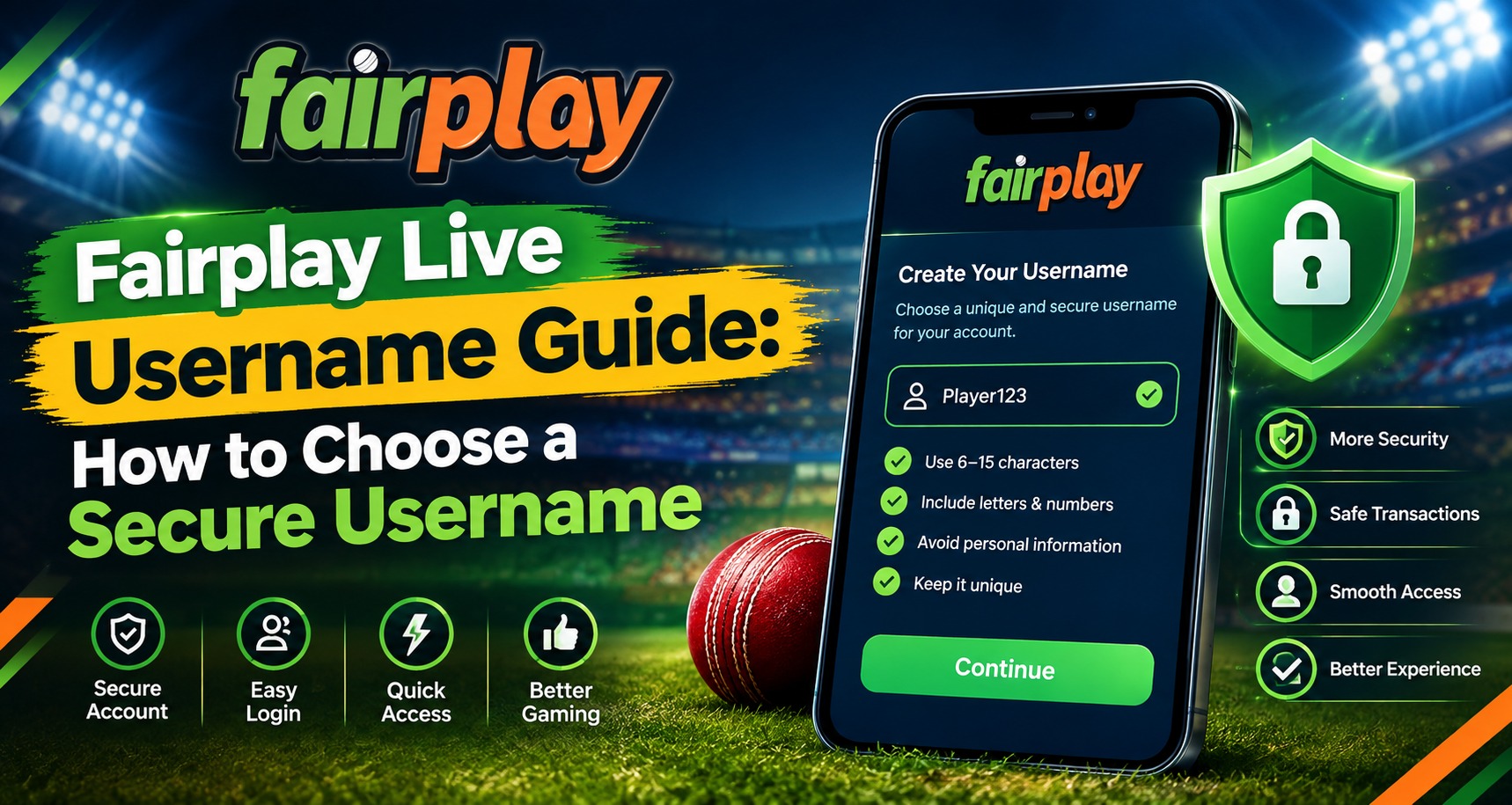
Choosing a username may seem like a small part of creating an online account, but it can have a meaningful impact on privacy and account management. A good username should be easy for you to remember without revealing unnecessary personal information. When setting up or managing a fairplay live account, taking a few moments to choose a thoughtful username can make everyday access more comfortable while supporting better online privacy.
Why Your Username Matters
A username is often one of the first details associated with an online account. It may appear in account areas, profiles, activity sections, or other user-facing parts of a platform, depending on its features.
For that reason, your username should not reveal information such as your full name, date of birth, phone number, home address, or other details that could make you easier to identify. Security guidance from the Federal Trade Commission also recommends keeping account credentials unique and protecting information that could make accounts easier to compromise.
A carefully selected username can therefore provide two benefits: easier account recognition for you and better privacy from unnecessary exposure.
How to Create a Secure Username
The best username is usually simple, memorable, and not directly connected to sensitive personal information. Consider using a combination of unrelated words and numbers rather than information that someone could easily discover about you.
For example, instead of using your full name and birth year, you could choose a neutral combination such as a favourite non-personal word with a few random characters.
Before confirming your choice, check these points:
- Avoid your full name or date of birth.
- Do not include your phone number.
- Avoid using your email address as your public username.
- Do not use offensive or inappropriate terms.
- Follow the platform’s current username requirements.
- Choose something you can remember without writing it publicly.
- Avoid usernames that are identical to important personal accounts.
The goal is not to create a complicated username. It is to create one that does not unnecessarily expose personal information.
Keep Your Username Separate From Your Password
One important distinction is that your username and password serve different purposes. Your username identifies the account, while the password helps protect access to it.
Never turn your username into your password or use an obvious variation of it. For example, adding “123” to a username does not create meaningful protection.
The FTC recommends using long, unique passwords and enabling two-factor authentication when available.
This separation also improves the overall customer experience. You can have a username that is easy to remember while keeping the password private, complex, and unique.
Choose a Username That Is Comfortable to Use
A secure username should not be unnecessarily difficult. If you need to type it regularly, excessive symbols, confusing character combinations, or long strings can make everyday login more frustrating.
Think about how the username will work across different devices. A straightforward name can be easier to enter on a smartphone, tablet, or desktop computer.
At the same time, avoid making it so simple that it exposes personal information. Finding the right balance between convenience and privacy is a practical part of thoughtful account management.
Consider Your Long-Term Choice
A username can remain associated with an account for a long time, so changing it frequently may not always be practical or possible. Before selecting one, think beyond your immediate needs.
Ask yourself whether the username could still feel appropriate after several years. Avoid temporary jokes, references to a current event, or information that may become outdated.
This approach offers better long-term value. A neutral and professional username can remain useful even if your interests or online habits change.
What to Do If Your Username Is Already Exposed
If your username has already been shared publicly, there is no need to panic. A username by itself is generally not the same thing as a password or authentication code.
However, exposed usernames can sometimes make targeted phishing attempts easier. Be cautious of unexpected messages asking for passwords, OTPs, verification codes, or other private information.
When using Fairplay services, access the intended website directly rather than relying on unfamiliar links. Fairplay’s own account guidance also advises users to keep credentials private, avoid sharing verification codes, and use trusted links when accessing an account.
If you suspect unauthorized account activity, change your password and use the platform’s available support or account-recovery options.
A Thoughtful Approach to Account Security
Choosing a username is only one part of responsible digital account management. Good security also involves using a unique password, keeping software and browsers updated, avoiding suspicious links, and enabling additional authentication where available.
It is also worth reviewing your account information occasionally. Remove unnecessary personal details where the platform allows it and make sure your recovery information is current.
This kind of thoughtful decision-making supports both convenience and sustainability. Instead of repeatedly changing account details because of poor initial choices, selecting sensible information from the beginning can make account management simpler over time.
Changing Customer Expectations Around Online Accounts
Users today expect online platforms to be convenient without overlooking privacy. A complicated registration or login process can create unnecessary frustration, while an overly relaxed approach to security can create avoidable risks.
A balanced experience means users can understand what information they need to provide, choose suitable account details, and protect their credentials without unnecessary complexity.
For fairplay live, choosing a sensible username can therefore be viewed as one small but useful step toward a more organized and privacy-conscious account experience.
Conclusion
A secure username does not need to be complicated. The best approach is to choose something memorable, avoid unnecessary personal information, keep it separate from your password, and consider how suitable it will remain over time. These simple habits can improve convenience while supporting better account privacy.
When creating or updating a Fairplay com account, thoughtful username selection is a practical first step. Combined with strong passwords, careful link checking, and additional security measures where available, it can contribute to a safer and more comfortable online experience.
FAQs
1. What makes a username secure?
A secure username should be memorable without revealing sensitive personal information such as your full name, phone number, or date of birth.
2. Should my username be the same as my password?
No. Your username and password should be different. Use a unique, strong password to protect your account.
3. Should I use my real name as my username?
It is generally better to avoid unnecessary personal information in usernames, especially when the username may be visible to other users.
4. Can I use numbers in my username?
Yes, if the platform allows them. Avoid using personally meaningful numbers such as your birth year or phone number.
5. What should I do if someone knows my username?
Knowing your username does not automatically give someone access to your account. Keep your password and verification codes private, and enable additional authentication when available.