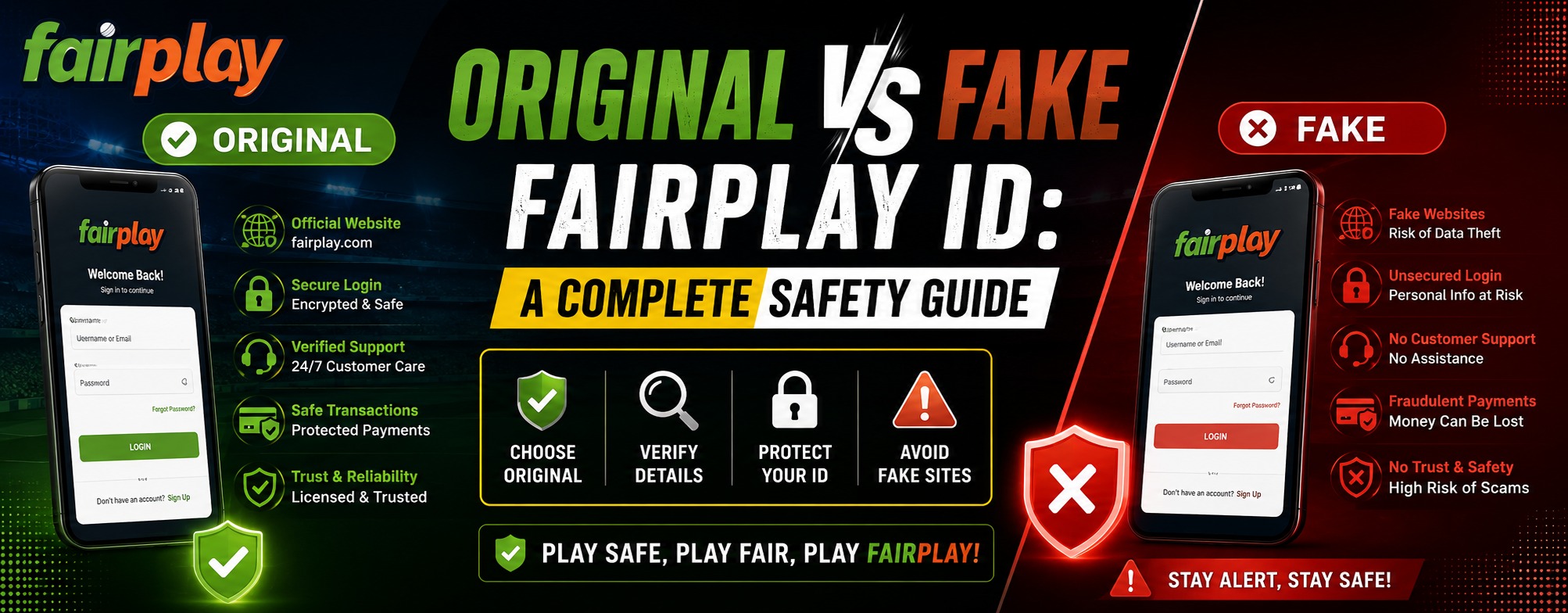
When people search for a Fairplay ID, they may come across several websites, social media accounts, messages, and third-party pages offering account access. The biggest challenge is knowing which source is genuine and which one could put personal or financial information at risk. A fake account service may use a similar name, copied branding, or a convincing-looking website to appear legitimate. That is why checking the source carefully before sharing information is an important part of using any online platform.
Why the Difference Between Original and Fake Matters
A genuine account should be created or accessed through a verified and trustworthy channel. Fake services can create problems ranging from stolen login details to misleading payment requests. Some may also imitate the appearance of a familiar platform so closely that users do not notice the difference at first glance.
Competitor pages commonly highlight checking the website address, protecting login credentials, and avoiding unknown download sources. These are sensible precautions because a familiar logo alone does not prove that a website is authentic.
The safest approach is to slow down, verify the source, and avoid making decisions based only on an advertisement, forwarded message, or social media post.
How to Identify a Genuine Account Source
Start with the website address. Look carefully for unusual spellings, extra words, unexpected domain extensions, or characters that are easy to overlook. A secure connection indicated by HTTPS is useful, but it should not be treated as proof that the website itself is genuine. Scammers can also obtain valid security certificates.
Next, look for consistent information across the website. A trustworthy platform should provide understandable terms, privacy information, account guidance, and appropriate customer-support details. If a page makes unrealistic promises or creates pressure to act immediately, treat that as a warning sign.
Do not rely on search ranking alone either. Search engines can display many third-party pages, and appearing near the top of results does not automatically establish authenticity.
Common Warning Signs of a Fake ID
There are several signs that should make users pause before continuing:
- The website address looks almost identical to another site but contains small spelling changes.
- Someone sends an unexpected login link through a messaging application.
- A person asks for your password or one-time verification code.
- Payment is requested through an unfamiliar personal account.
- The website contains excessive promises about guaranteed results or returns.
- Customer support refuses to provide clear information about account issues.
- You are pressured to share personal documents without understanding why they are required.
Security-focused Fairplay pages also advise users to protect passwords and avoid sharing credentials through informal communication channels.
Quality, Ease of Use and Customer Experience
Safety should come before convenience, but usability still matters. A properly maintained website should make basic tasks such as finding account information, understanding policies, and contacting support reasonably straightforward.
Good customer experience is not simply about having a modern design. Clear instructions, readable information, predictable navigation, and transparent account procedures can make it easier for users to make informed decisions.
This is particularly important on mobile devices. Many users access online services through smartphones, so checking the complete website address before entering credentials is just as important on a small screen as it is on a desktop. Some Fairplay-related pages specifically discuss mobile access and advise users to obtain applications only through known sources rather than unfamiliar third-party downloads.
Versatility Without Compromising Security
A useful online account should work consistently across compatible devices and provide clear information about available services. However, versatility should never become an excuse to ignore security.
If an unfamiliar person claims they can provide a special account, faster access, exclusive benefits, or a private login route, verify the claim independently. Do not assume that additional features or a more attractive offer means better value.
When checking a Fairplay ID, users should consider both convenience and the long-term consequences of handing personal information to an unverified source.
Think About Long-Term Value
Short-term convenience can sometimes hide long-term risks. Saving a few minutes by clicking an unknown link is not worth compromising an account, payment information, or personal documents.
Thoughtful decision-making means checking the source before registration, using strong and unique passwords, keeping verification codes private, and reviewing account activity regularly. It also means avoiding unnecessary downloads and keeping devices and browsers updated.
These habits are useful beyond Fairplay. As customer expectations shift toward faster mobile access and digital account management, basic online security awareness becomes increasingly important.
What to Do If You Suspect a Fake Account
If you believe you have used a suspicious website, stop entering additional information. Change your password through a verified account-access route if possible, monitor relevant financial activity, and contact the appropriate official support channel.
Do not send additional documents or payments simply because someone claiming to be support asks for them. Save screenshots, messages, transaction records, and suspicious website details if you need to report the incident.
Conclusion
Knowing how to distinguish an authentic service from an imitation is an important part of responsible online activity. A genuine-looking logo, attractive offer, or search result is not enough to establish trust. Check the domain, review the available policies, protect your credentials, and question unexpected requests for money or personal information. When using Fairplay, treat your Fairplay com as sensitive account information and make security the priority over speed or convenience. Responsible users make informed choices, verify sources independently, and avoid taking unnecessary risks.
FAQs
1. How can I check whether a Fairplay website is genuine?
Check the exact domain, look for consistent company information, review privacy and terms pages, and verify account-access details through a trusted source. Do not rely only on logos or search rankings.
2. Should I share my password with someone offering account support?
No. Passwords and one-time verification codes should remain private. If someone requests them through an unexpected message, treat it as a potential security warning.
3. Is HTTPS enough to prove that a website is genuine?
No. HTTPS encrypts the connection, but it does not by itself confirm that the website belongs to the company you intended to visit.
4. What should I do if I clicked a suspicious Fairplay link?
Avoid entering further information. If you entered credentials, change the affected password through a verified channel and monitor your account for unusual activity.
5. Can fake websites copy the Fairplay design?
Yes. Imitation websites can copy logos, colours, layouts, and wording. That is why checking the exact domain and source is more reliable than judging a page by appearance alone.